Places You Can’t Miss in Gilgit-Baltistan: A Comprehensive Guide
Gilgit-Baltistan, the jewel in the crown of Pakistan’s northern regions, is a place of unmatched natural beauty and cultural diversity. This area is a gold mine for adventurers, nature lovers, and explorers, with its towering mountains, tranquil valleys, and sparkling lakes. An extensive guide to Gilgit-Baltistan’s most breathtaking 20 locations can be found below.
1. Hunza Valley
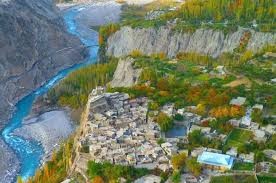
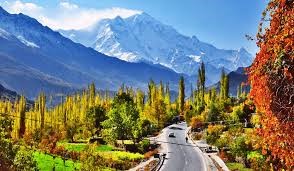
With its stunning scenery, snow-capped mountains, and rich cultural legacy, Hunza Valley is a veritable paradise on Earth. It is renowned for its historical forts, breathtaking views, and friendliness. It is situated in the Gilgit District.
Must-see sights:
⦁ The 700-year-old Baltit Fort was built in the Tibetan style.
⦁ Older than Baltit, Altit Fort features a blend of regional and Persian architectural styles.
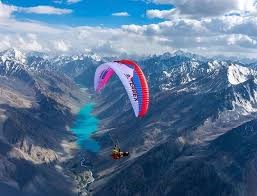
⦁ A landslide in 2010 created Attabad Lake, which is renowned for its deep blue waters.
⦁ Eagle’s Nest: A vantage point with expansive views of Hunza.
Note: The Karakoram Highway makes it simple to get there from Gilgit.
2. Skardu
Skardu is a gateway to the highest mountains in the world, including K2, and is located along the banks of the Indus River. It has historical buildings, lakes, and deserts.
Must-see sights:
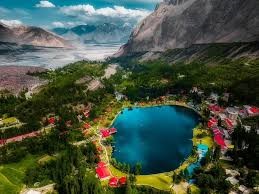
⦁ Lower Kachura Lake is home to the Shangri-La Resort.
⦁ Satpara Lake is a picturesque freshwater lake.
⦁ Shigar Fort: A historic hotel built on a 400-year-old fort.
⦁ The Cold Desert (Katpana): The world’s tallest desert with dunes.
3. Fairy Meadows
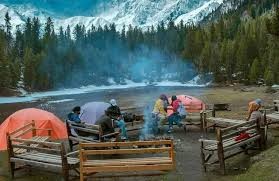
Known for its picturesque views and proximity to Nanga Parbat, Fairy Meadows is a breathtaking high-altitude grassland situated in Gilgit-Baltistan, Pakistan’s Diamer District. At about 3,300 meters (10,800 feet) above sea level, it is a well-liked base camp for hikers and a stunning location for those who enjoy the outdoors. Lush green pastures, thick alpine forests, and breathtaking views of the snow-capped Nanga Parbat are what define the meadows.
Must-see sights:
⦁ Trekkers begin their journey to Nanga Parbat at Fairy Meadows Base Camp.
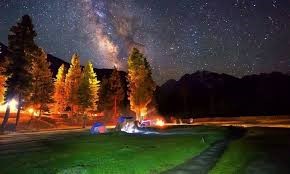
⦁ Adventure seekers will love camping under the stars.
Note: From Raikot Bridge, it’s accessible by jeep track and a quick hike.
4. The National Park of Deosai
In Gilgit-Baltistan, Pakistan, between the Skardu and Astore districts, sits the high-altitude alpine plain known as Deosai National Park.
Must-see sights:
⦁ Sheosar Lake is a deep-blue body of water with snow-capped mountains in the distance.
⦁ Wildlife: Home to a variety of bird species and Himalayan brown bears.
5. The Valley of Naltar
The Naltar Valley is located in Gilgit-Baltistan, Pakistan, approximately 34 kilometers from the city of Gilgit. The three lakes—Strangi Lake, Blue Lake, and Bodlok Lake—as well as the mountainous terrain, set this forested area apart.
Must-see sights:
⦁ The Pakistan Air Force is in charge of running the ski resort.
⦁ Naltar Lakes: renowned for their color changes in response to light.
6. The Valley of Phander
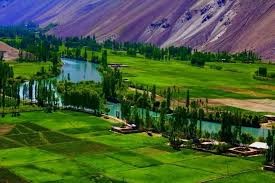
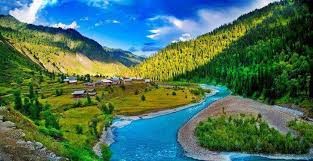
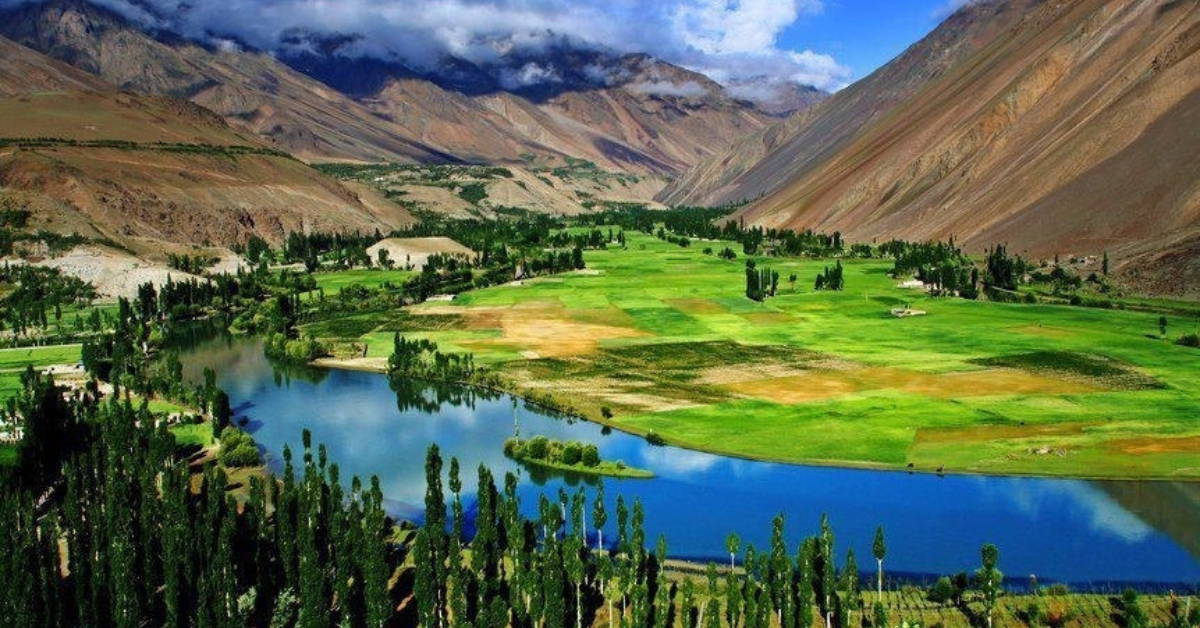
At 1,454 feet above sea level, Phander Valley is situated in Gilgit-Baltistan, Pakistan’s District Ghizer. The Phander Valley, also known as “Little Kashmir,” is renowned for its most exquisite and alluring valleys, verdant fields, deep blue lakes, and the river that flows through it.
Must-see sights:
⦁ Phander Lake: Great for boating and trout fishing.
⦁ curved roads and colorful scenery.
7. The Khaplu Valley
In the disputed Kashmir area of Pakistan-administered Gilgit-Baltistan, the city of Khaplu is the administrative center of the Ghanche District. Khaplu is the starting point for exploring some amazing lakes and hiking routes.
Must-see sights:
⦁ Currently a heritage hotel, Khaplu Palace was constructed in the 1800s.
⦁ Chaqchan Mosque: One of the oldest in the area, it was constructed in 1370.
8. Valley of Shigar
In Gilgit-Baltistan, the Shigar Valley is a mesmerizing valley known for its breathtaking scenery and rich cultural legacy. The valley is a popular destination for adventure and nature lovers due to its majestic mountains, sparkling Shigar River, and lush surroundings.
Must-see sights:
⦁ Shigar Fort: An opulent hotel with a touch of history.
⦁ A high-altitude desert with golden sands is known as the “Cold Desert.”
9. Domail Astore
The historical grandeur of Pakistan’s Gilgit-Baltistan region is displayed in the Astore Valley. Domail Rainbow Lake is located in Minimarg Astore valley, Gilgit-Baltistan, Pakistan. This lake is one of the beautiful lakes in the world, with a wild open area covered with lush green meadows. The lake is covered with flowers, which gives such a pleasant feeling.
Must-see sights:
⦁ Rainbow Lake is a vibrant lake surrounded by flowers and tucked away amid verdant meadows.
⦁ Minimarg Views: Wooden cabins and picturesque alpine village scenery.
10. Passu Cones
In the Gilgit-Baltistan region of northern Pakistan, in the Gojal Valley of Upper Hunza, sits the small village of Passu. Passu is a popular tourist destination situated along the Karakoram Highway.
Must-see sights:
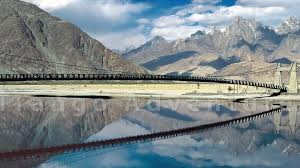
⦁ Hussaini Village Suspension Bridge.
⦁ Close to the famous Passu Cones is Passu Glacier.
11. The Valley of Hushe
Hushe is the last village of the Ghangche District of Gilgit-Baltistan, Pakistan. The valley is renowned for its granite rocks, snow-capped peaks, and stunning beauty.
Must-see sights:
⦁ Trekking routes: Laila Peak and Gondogoro La.
⦁ Rock spires and glaciers.
12. The Valley of Gupis
The Gupis Valley is situated on the banks of the River Gilgit, approximately 112 kilometers west of Gilgit, in District Ghizer, Gilgit-Baltistan, Pakistan. The elevation of the Gupis is 2176 meters. In the past, the military used this fort for defense. Later, the monarch of the era spent several years residing in this fort.
Must-see sights:
⦁ Khalti Lake is well-known for its trout fishing.
⦁ Old defensive fortifications that are still intact are called stone forts.
13. The Valley of Yasin
Yasin Valley is a high-altitude mountain valley in Gilgit-Baltistan’s northern Gupis-Yasin District that is tucked away in the Hindu Kush mountain range. The distance between the valley and Gilgit, the capital of Gilgit-Baltistan, is roughly 148 kilometers.
Must-see sights:
⦁ Historical artifacts from the Dard culture.
⦁ The distinctive Shina language and cultural diversity.
14. Bagrot Valley
Bagrote is a valley in the Karakoram range in the Gilgit-Baltistan region of northern Pakistan. A destination that people aspire to visit. Because it’s no less than Heaven, those who have visited say that this is a little slice of heaven on earth.
Must-see sights:
⦁ a way of life centered on agriculture.
⦁ Simple village life and regional handicrafts.
15. Baha Lake
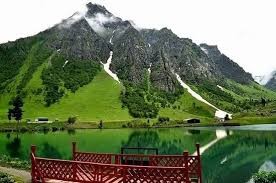
Baha Lake is situated in the Pakistani district of Ghizer’s Koh-i-Ghizer, Gilgit-Baltistan. The landscape is believed to be 3,622 meters (11,883 feet) above sea level. North to south is its direction. One must travel from Islamabad to Gilgit along the Karakoram Highway to get to Baha Lake.
Must-see sights:
⦁ Magnificent Reflections: The lake is a great place for photography because of the way its crystal-clear blue water reflects the surrounding peaks.
⦁ Calm Camping Area: Perfect for peaceful hiking and camping away from the throng.
16. The Khunjarab Pass Gilgit
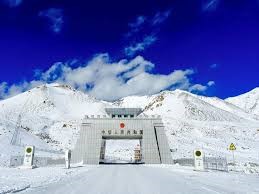
Khunjerab Pass is an international border crossing between China’s Xinjiang region and Gilgit-Baltistan, Pakistan. It is the highest paved international boundary in the world, rising 4,693 meters (15,397 feet) above sea level. Frequently referred to as the “Gateway to China,” it serves as a significant hub for travel and trade between the two nations.
Must-see sights:
⦁ Khunjerab National Park: Rare animals like snow leopards, Marco Polo sheep, and Himalayan ibex can be found there. Additionally, it is a protected area for biodiversity.
⦁ Border Gate and Landmark Signage: The famous Pakistan-China border gate, which is adorned with flags and signs and represents unity, is a popular location for tourists to snap photos. . ⦁ The Karakoram Highway Scenic Drive offers sweeping views of snow-capped mountains, rivers, and valleys as you ascend toward the pass. One of the highlights is the drive itself.
17. Valley of Thalle
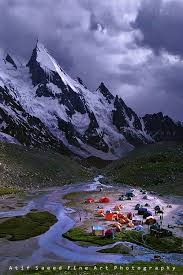
The term “Thalle La Trek” describes a trekking route that crosses the 4,572-meter Thalle La Pass in Gilgit-Baltistan, Pakistan. Usually lasting 11–13 days, this trek is well-liked by both seasoned and inexperienced hikers due to its comparatively easy ascent. The route offers breathtaking views of the Karakoram Range, including the famous Saltoro Mountains, and connects the Shigar and Khaplu valleys.
Must-see sights:
⦁ fishing and hiking.
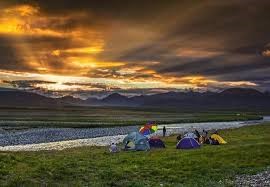
⦁ Camping in a natural setting.
The term “Thalle La Trek” describes a trekking route that crosses the 4,572-meter Thalle La Pass in Gilgit-Baltistan, Pakistan. Usually lasting 11–13 days, this trek is well-liked by both seasoned and inexperienced hikers due to its comparatively easy ascent. The route offers breathtaking views of the Karakoram Range, including the famous Saltoro Mountains, and connects the Shigar and Khaplu valleys.
Must-see sights:
⦁ fishing and hiking.
⦁ Camping in a natural setting.
18. Kargah Buddha
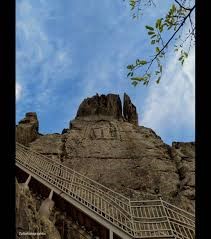
An archeological site called Kargah Buddha is situated around six miles outside of Gilgit, Gilgit-Baltistan, Pakistan. On the cliff wall of Kargah Nala, there is a carved figure of a big standing Buddha that is around fifty feet high. The carving is said to have been created in the 7th century and is in a style that is also seen in Baltistan.
Must-see sights:
⦁ Buddhism has a long history in the area. ⦁ picturesque setting close to the Kargah Nullah.
19. Desert of Katpana
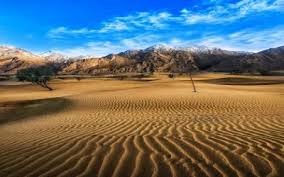
Located in Skardu Valley, Gilgit-Baltistan, Pakistan, the Katpana Desert—also referred to as Katpana Biang-a or Cold Desert—is a high-altitude desert. Large dunes in the desert are occasionally blanketed in snow during the winter.
Must-see sights:
⦁ striking dunes with snow-capped mountains in the background.
⦁ Perfect for jeep rallies and photography.
20. Hopper Valley
Hoper Valley is a picturesque area in Gilgit-Baltistan, Pakistan, that is part of the Nagar Valley. It is well-known for its stunning scenery, which includes the Hoper and Spantik glaciers, and is a well-liked trekking and vacation spot. The main city of the Nagar Valley, Nagar Khas, is about 10 kilometers away from the valley.
Must-see sights:
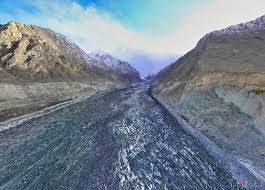
⦁ Hoper Glacier: A huge glacier that can be seen from the valley. ⦁ Natural stone dwellings and a traditional way of life. ⦁ Waterfalls, treehouses, and a serene camping site. ⦁ Locally crafted stone tables and beds add to the valley’s unique charm.
21. Shandur Lake, upper Ghizer
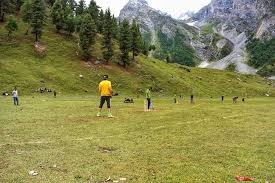
Known for its beauty and the yearly Shandur Polo Festival, Shandur Lake is located on the Shandur route, a high mountain route that connects Chitral and Ghizer in Gilgit-Baltistan. At 3,700 meters above sea level, it is the highest polo field in the world. The lake is especially well-known for its gorgeous setting of marshy margins and tall snowy peaks.
Must-see sights:
⦁ The highest polo field in the world, Shandur Polo Ground, is well-known for hosting the Shandur Polo Festival every year ⦁ Scenic Landscape: Perfect for nature enthusiasts and photographers, surrounded by wetlands and snow-capped hills.
Final Thoughts Gilgit-Baltistan is an experience of a lifetime, not just a place to visit. Every place, whether well-known or tucked away in the nooks and crannies of tall mountains, provides a different viewpoint on the majesty of nature and the richness of culture. The area rewards both the adventurous and the leisurely traveler, from the busy marketplaces of Hunza to the serene glaciers of Hoper.
This guide provides a window into the spirit of northern Pakistan, whether you’re planning your first trip or coming back to see more. Don’t just go; get involved, educate yourself, and make connections. As its valleys, peaks, and people recite its silent tales, Gilgit-Baltistan welcomes you with open arms.