The short version
210 km, about six hours, paved the whole way. Leave Gilgit before six in the morning. Take a car if you are two or three people, a van if you are a family with luggage, and only take a Land Cruiser if you are continuing to Deosai or Askoli afterwards.
That is the whole guide. What follows is why each of those answers is what it is, because the road has changed a great deal in five years and most of what is written about it online describes a road that no longer exists.
The road has genuinely improved
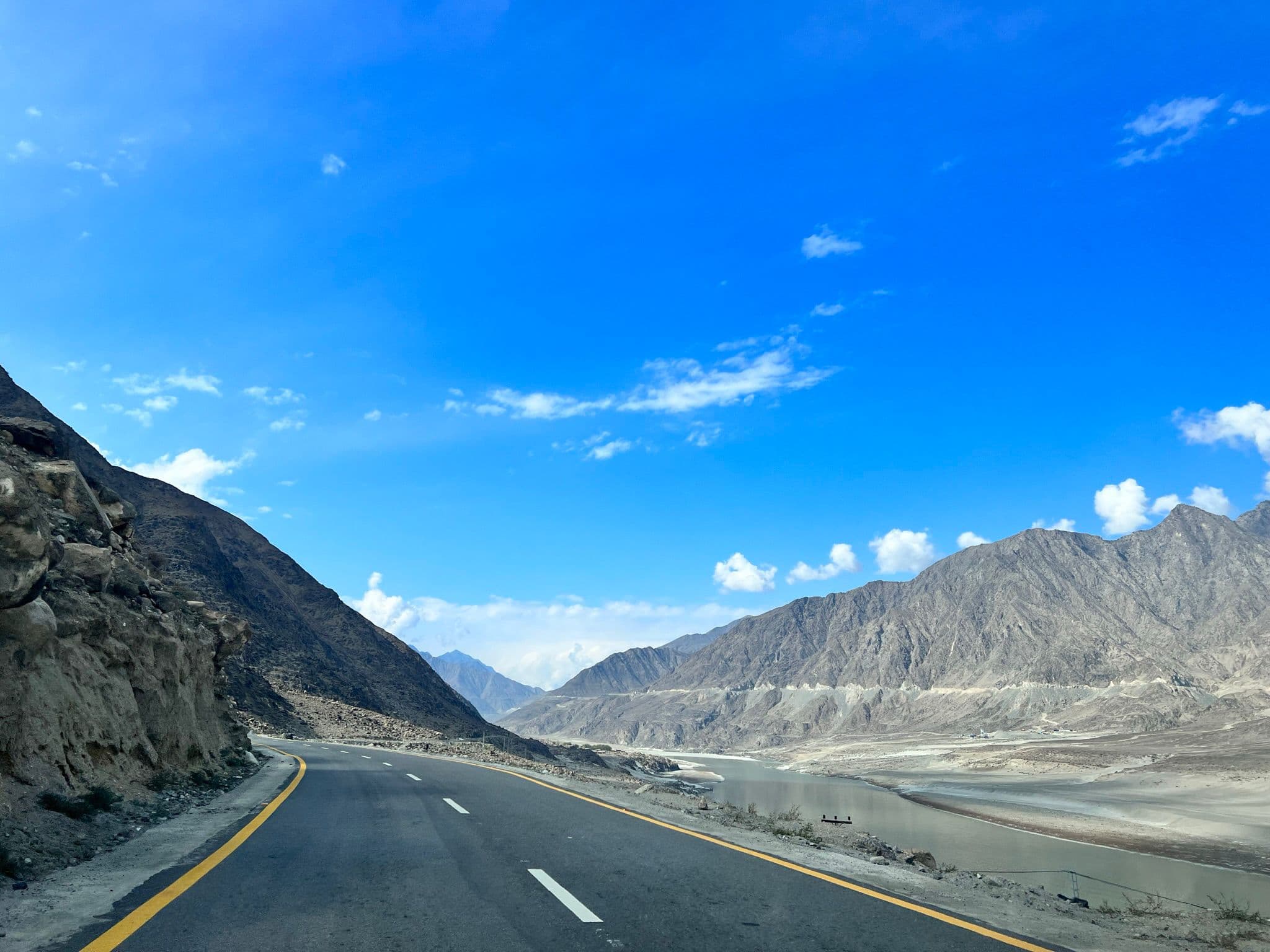
For years the Skardu road was the reason people flew. It was unpaved in long stretches, it took nine to eleven hours, and a landslide could turn that into a night in the vehicle. The rebuilt road is paved, wider, and takes about six hours on a normal day.
What has not changed is the geography. The road follows the Indus east from Jaglot, and the river cuts a gorge that does not leave much room. Between Jaglot and Sassi there are sections cut directly into rock with a drop on one side. They are not dangerous at 40 km/h in daylight. They are unpleasant at night, and they are worse in rain.
Why six in the morning
Three reasons, in order of importance.
First, light. You want the narrow sections behind you while you can see the road surface and oncoming traffic on the blind corners. Second, traffic. Trucks and the shared vans move through the middle of the day, and passing on a single-lane section costs minutes each time. Third, weather. Rain in these valleys tends to build in the afternoon, and rain is what triggers the small slides that block one lane.
An early start also gives you the option to stop. Leave at six and you can spend forty minutes at Kachura lakes and still be in Skardu for a late lunch. Leave at ten and every stop becomes a calculation about arriving in the dark.
Where you actually stop
Everything between these is a tea stall with a kettle and a bench. Carry water and something for children to eat. There is no reliable pharmacy between Gilgit and Skardu.
- ·Jaglot junction, 45 minutes in. Fuel, tea, and the confluence viewpoint a few minutes back toward Gilgit if nobody has seen it before.
- ·Sassi, about two hours fifteen. The first proper stop with toilets. This is where we top up fuel before the long middle section.
- ·Tolti, about four hours. Lunch if you left early. Apricot orchards through the valley in July and August.
- ·Kachura, about five hours twenty. Upper and Lower Kachura lakes. Worth forty minutes; the lower lake is the famous one.
What can go wrong, and what we do about it
Landslides after heavy rain. They are usually cleared within hours, sometimes a day. The problem is not the slide; it is starting the drive without knowing about it. Our captains call ahead before committing to a departure, and if the road is shut we tell you before you get in rather than after four hours of driving.
The other failure mode is a driver who does not know the road. This route rewards someone who knows which corners are blind and where the surface breaks up after winter. It is one of the routes where we are strict about which captains we put on it.
Should you fly instead?
The flight to Skardu is 50 minutes and spectacular. It also cancels often, and a cancellation in Skardu means either waiting for the next window or making the road journey anyway with a day less in hand.
The pattern that works for most travellers: drive one way, fly the other, and keep the drive on the side of the trip where losing a day would hurt least. If you only have five days in Baltistan, fly in and drive out.
Fares, as of this season
Every fare is agreed before you accept the booking. There is no meter, no surge, and no conversation about money halfway to Sassi.
- ·Shared seat: PKR 3,200 per person, morning departures when the vehicle fills.
- ·Private car: from PKR 15,000 one way, up to four passengers.
- ·Private van: from PKR 22,000, up to twelve with luggage.
- ·Land Cruiser: from PKR 28,000, worth it only if Deosai or Askoli follows.
Questions
How many hours is Gilgit to Skardu?
About six in a car with one stop, seven if you are travelling with a family or stopping at Kachura lakes.
Is the Gilgit Skardu road paved now?
Yes, paved the whole way and widened in most sections. Some narrow stretches between Jaglot and Sassi remain single-lane in practice.
What is the best time to leave Gilgit for Skardu?
Before six in the morning. It puts the narrow sections behind you in good light and leaves room for stops.